Complete Guide on ERP for the aluminium extrusion industry
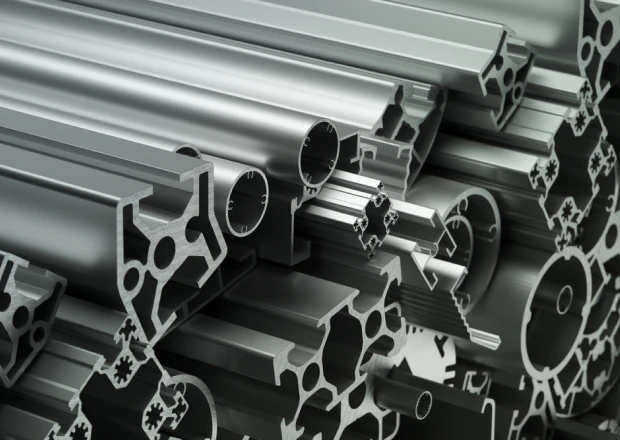
Enterprise Resource Planning software is a centralised digital platform that integrates all the core business processes from raw material procurement to customer delivery into a single system. ERP is designed specifically for aluminium extrusion manufacturing, showing how the aluminium industry actually works. Instead of showing general terms like raw material or finished goods, it actually knows billets, dies, presses, alloys, profiles, tempers, and coatings.
Aluminium extrusion is a complex business because at the same time you have to manage dozens of active dies, multiple alloy grades (6061, 6063, 6082 and more), variable press capacities, lead times driven by die availability, and surface finishing queues and at the same time you have to fulfill customer orders that may demand exact lengths, tolerances, colours, and certifications.
A purpose-built ERP for extrusion plants brings discipline, visibility, and intelligence to every one of these moving parts. It connects your shop floor to your sales desk, your die store to your dispatch bay, and your quality lab to your customer's inbox.
Why Generic ERP Software Falls Short for Extrusion
Many aluminium extrusion plants attempt to manage operations with generic ERP systems designed for discrete manufacturing or trading businesses. The result? Painful workarounds, parallel spreadsheets, and critical data living in the plant manager's memory rather than in a system.
| Common Challenges | ERP-Enabled Solutions |
|---|---|
| No native die lifecycle or die trial management | Full die register with trials, corrections, and maintenance history |
| Cannot track billet heat numbers & alloy grades by press | Heat-number-wise billet consumption is linked to every press run |
| No extrusion-specific Bill of Material (BoM) with weight calculations | Profile BoM with weight/meter, alloy, and temper specifications |
| Inability to manage finishing queues (anodising, powder coating) | Integrated finishing job cards and sub-contractor management |
| No profile-wise scrap and yield tracking | Real-time yield dashboards by press, shift, and profile |
| Manual cutting plans and order nesting | Automated cutting plans linked to sales orders |
| Disconnected quality certifications from production batches | Digital quality records attached to production lots |
| No press-load optimisation or scheduling | Press scheduling based on die availability and capacity |
The Aluminium Extrusion Manufacturing Process — and Where ERP Fits
If you are opting for ERP software, it is important to map the plant’s value chain. Aluminium extrusion manufacturing follows a well-defined sequence, and ERP should understand and align all the processes, make work easier and not force the plant to change its operations according to the system
Raw Material Procurement — Billets & Alloys
Aluminium billets, which are typically used like 6063-T5, 6061-T6, and 6082 are procured from smelters or traders. ERP helps you handle the entire process smoothly, from creating purchase orders and recording incoming material to tracking heat numbers, storing chemical test certificates, and managing billet inventory based on alloy and size.
Die Preparation & Management
Dies are the most important part of the extrusion process because they shape the final product. ERP helps you keep track of every die profile, press compatibility, trial history, correction records, coating (nitriding)schedules, current status of die. In simple terms, it helps you always know where your dies are and how they are performing.
Press Operation & Extrusion
ERP helps you manage what each press is doing. It creates production orders for every press and keeps track of how much billet is used, how fast the extrusion is running, and how the press is performing. It also records material waste like back-end scrap and butt-end weight. Each press run is linked to a specific die, alloy, and customer order for full traceability.
Stretching, Ageing & Heat Treatment
Post-extrusion operations like stretching (for straightness) and ageing (for temper: T5, T6) are tracked as separate process steps with time and temperature logs, linked to the production batch.
Cutting & Sawing
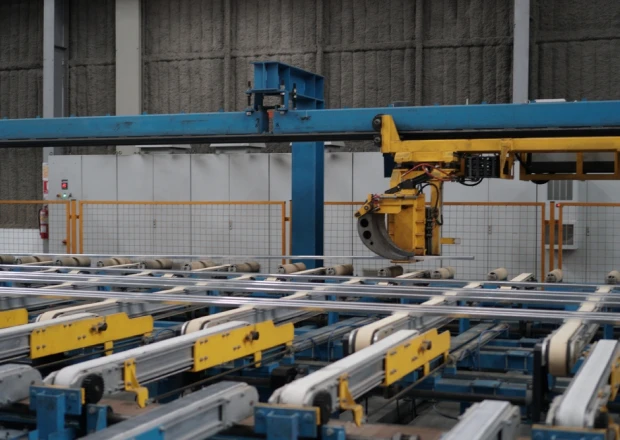
Long profiles are cut to order-specific lengths. ERP generates optimised cutting plans to minimise scrap, tracks actual cuts versus planned, and records off-cuts that can be reused or scrapped.
Surface Finishing — Anodising, Powder Coating, Wood Finish
Depending on the customer specification, profiles undergo surface treatment. ERP manages in-house finishing lines or sub-contracting, tracks batch movement, colour/shade specifications, and finish quality inspection.
Quality Inspection & Certification
After production, the finished material goes through quality checks to make sure everything is as per standards. This includes testing strength (like tensile strength and elongation), checking dimensions, and inspecting surface quality. A good ERP records all these test results for each batch and automatically generates test certificates. It also links these certificates to the dispatch documents. In simple terms, it ensures every product sent to the customer is tested, approved, and properly documented.
Packing, Dispatch & Invoicing
Finished goods are packed, labelled, and dispatched against sales orders. ERP manages warehouse locations, packing lists, transporter details, e-way bills, and generates invoices with full lot traceability.
Key ERP Modules Every Extrusion Plant Needs
An ERP system for aluminium extrusion is more than a single application; it is a combination of several applications working in harmony. This section explains in detail what functions each module performs:
Die & Tooling Management
Lifecycle management of all dies, from procurement, first trial, correction history, preventive maintenance, to its eventual disposal.
Sales Order Management
Sales orders with customer profiles, lengths, alloys, tempers, finishes, quantities either in kilograms or meters, and scheduling. The orders can be automatically connected with the manufacturing process.
Production Planning & Scheduling
Planning and scheduling of press runs based on die and billet availability and the order's priority.
Inventory & Billet Management
Life cycle management of the billets with respect to heat numbers, alloy, diameters, and weights. Also managing the inventory of finished goods in several warehouses, lot-wise.
Finishing & Sub-Contracts
In-house finishing and sub-contracting, like anodising, powder coating, wood finish, job cards, shade specifications, and return status.
Quality Management System
Managing dimensional, mechanical, and visual inspections, generating test certificates, managing non-conformances, and corrective actions.
Accounts & Finance
Integrating the accounts ledger, AP/AR, GST accounting, costing, and other financial transactions with the manufacturing operations.
Dispatch & Logistics
Packing list, delivery challans, e-way bills, transporters, invoicing, and overall dispatch management on a per customer basis.
MIS & Analytical Dashboard
Press yields, die efficiencies, order fulfilment, scrap analysis, profitability by customer, and profiles.
MIS & Analytical Dashboard
Press yields, die efficiencies, order fulfilment, scrap analysis, profitability by customer, and profiles.
Measurable Benefits & ROI of ERP in Aluminium Extrusion
| Benefit Area | Typical Impact | How ERP Delivers It |
|---|---|---|
| Yield Improvement | 1–3% improvement in press yield | Accurate billet vs. output tracking highlights inefficiencies |
| Scrap Reduction | 20–35% reduction in avoidable scrap | Cutting plan optimisation and real-time scrap monitoring |
| Inventory Reduction | 15–25% lower inventory holding | Accurate stock visibility eliminates over-purchasing |
| On-Time Delivery | 20–30% improvement in OTD rate | Integrated scheduling and order-tracking disciplines |
| Customer Customer Complaints | 30–50% reduction in quality complaints | Systematic QMS and traceability enable faster root-cause analysis |
| Administrative Effort | 40–60% reduction in manual data entry | Automated invoicing, certificates, and reports |
| Die Downtime | 15–25% reduction in die-related stoppages | Proactive die maintenance scheduling via ERP alerts |
The Bottom Line: ERP Is Not a Cost — It Is a Competitive Advantage
The aluminium extrusion industry in India is growing rapidly, driven by demand from construction, automotive, solar energy, consumer durables, and infrastructure sectors. As competition intensifies and customer expectations rise, the plants that win will be those that can deliver consistently, respond quickly, and operate efficiently.
A purpose-built ERP system is no longer a luxury for large plants. Even mid-sized extrusion operations with 2–5 presses can benefit enormously from the discipline, visibility, and automation that ERP brings. The question is no longer whether to implement ERP — it is how soon and which solution is right for your plant.
Why Lighthouse India for Your Extrusion ERP?
At Lighthouse India, we have built our ERP solution from the ground up for the specific needs of Indian aluminium extrusion manufacturers. Our platform covers every module discussed in this guide — with implementations running at extrusion plants across India. We understand the difference between a T5 and a T6 temper, between a bridge die and a flat die, and between an architectural profile order and an industrial extrusion job.
We do not adapt generic software to fit your plant. We bring extrusion-native ERP that your team will actually use — from the press floor to the boardroom.