What is Supply Chain Management? A Complete Guide for Manufacturers
Most manufacturing businesses don't lose money in one big, obvious moment. They lose it in small, repeated ways — a purchase order that went out a week late, a batch that got held up because a component was missing, a shipment that reached the customer three days past the promised date. Individually, each of these looks like a minor operational hiccup. Together, over a year, they add up to missed targets, strained supplier relationships, and customers who quietly start comparing you to someone else.
The common thread in almost all of these situations is the same: information that existed somewhere in the business, but not where or when it was needed. Supply chain management is, at its core, the discipline of closing that gap — and it's one of the highest-leverage areas a manufacturer can fix.
That disconnect between departments costs Indian manufacturers real money every year — missed deadlines, excess inventory, and customers who quietly start looking elsewhere. Most of it isn't caused by bad decisions. It's caused by not having the right information at the right time. This guide breaks down what SCM actually involves, where it tends to break down, and where ERP fits into fixing it.
What is Supply Chain Management?
Supply chain management is the coordination of everything it takes to turn raw material into a product in a customer's hands — sourcing, production, storage, transportation, and returns.
It isn't owned by one department. It's how well procurement, production, warehousing, and sales talk to each other. When they don't, the cracks show up downstream — usually on the customer's end, which is the worst place to find out.
The 5 Core Stages of a Supply Chain
Every supply chain, regardless of industry, moves through the same five stages:
- Planning - Forecasting what you'll need to produce, and when, based on demand data rather than guesswork.
- Sourcing and Procurement - Identifying reliable suppliers, negotiating terms, and ensuring raw materials arrive on schedule and within budget.
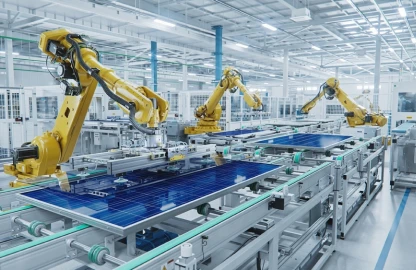
- Manufacturing - Converting raw material into finished goods, with quality control and production scheduling built in.
- Logistics and Delivery - Moving finished goods from your facility to the customer, across one warehouse or a national network.
- Returns and Reverse Logistics - Handling product that comes back due to defects, order errors, or warranty claims, without quietly bleeding margin.
Most businesses manage each stage reasonably well on its own. The trouble starts at the handoffs — when procurement doesn't know what production needs next week, or the warehouse has no idea a large order just came in.
Where Indian Manufacturers Actually Struggle
Generic supply chain advice tends to skip the specific pressures manufacturers in India deal with day to day. A few show up again and again:
- Supplier data scattered across spreadsheets and phone calls - without a single source of truth, tracking who delivers on time and who doesn't becomes guesswork instead of a data-backed decision.
- GST and multi-state compliance adding friction to logistics - moving goods across state lines involves documentation that, without automation, eats hours weekly and raises the risk of costly errors.
- Forecasting based on gut feel rather than demand data - usually behind both dead stock in the warehouse and stockouts on best-sellers, often at the same time.
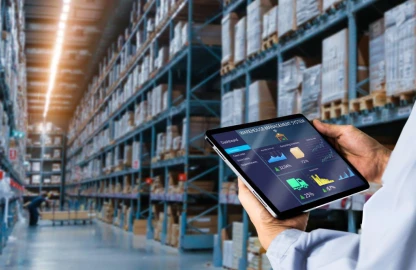
- No real-time visibility across warehouses or plants - if your team has to call around to check where stock actually is, the decision is already late.
None of these are failures of effort. They're the natural result of running a growing operation on tools that weren't built to talk to each other.
Supply Chain Management vs ERP vs Procurement Software
These three terms get used interchangeably, but they're not the same thing — and the difference matters when evaluating a solution.
| Term | What it is | Scope |
|---|---|---|
| Supply Chain Management (SCM) | The end-to-end process of sourcing, producing, and delivering goods | The full process — a discipline, not a piece of software |
| ERP (Enterprise Resource Planning) | A connected software system running finance, inventory, production, HR, and supply chain in one platform | The whole business; SCM is one module within it |
| Procurement Software | A tool focused on vendor selection, purchase orders, and approvals | One function within supply chain management |
In short: SCM is the process, procurement is one part of that process, and ERP is the system that runs the process in one connected place.
Signs Your Business Needs an ERP-Driven Supply Chain Module
If two or more of these sound familiar, it's worth taking seriously:
- Your team manages suppliers and purchase orders through Excel, WhatsApp, or a mix of both
- You can't see real-time stock levels across more than one location
- Demand forecasting relies on last year's numbers and a gut feeling
- Orders regularly slip past their promised delivery date
- No one can tell you, without checking three different places, how much raw material you have on hand right now
The cost of staying as-is is usually higher than the cost of fixing it — it's just spread out in ways that don't show up cleanly on a balance sheet.
How ERP Brings It Together
An ERP system with a proper supply chain management module doesn't just digitize what you're already doing — it closes the gaps between departments that cause the problems in the first place.
Procurement sees production's actual material needs instead of working off outdated reorder points. Warehouse teams get real-time visibility instead of end-of-day stock counts. Sales can quote realistic delivery dates because they can see actual inventory and production schedules, not guesses. Leadership gets one reliable view of the operation instead of stitching together reports from five different tools.
That's the practical difference between having software and having a supply chain that functions as one connected system.
If you want to see how this looks in practice — the specific modules, workflows, and reporting — our Supply Chain Management ERP Software page walks through exactly how Lighthouse ERP handles procurement, inventory, supplier management, and logistics for manufacturers.