ERP for Rolling Mill Industry

ERP software for the Rolling Mill Industry

ERP software for steel industry enjoys terrific growth due to raising infrastructure development projects across the globe. Major steel corporations are refocusing on improved scheduling and optimizing manufacturing execution

A Rolling Mill produces large no. of sections, many sizes in each section. specific lengths, many grades and quality standards. Manual handling of such enormous product mix is very cumbersome and inefficient. Lighthouse ERP is meant to manage various rolling products including TMT - FE 415/ 450/ 500/ 550, Structure steel - Girder / Channel / Angles etc., Rounds / Flat / Hex etc.

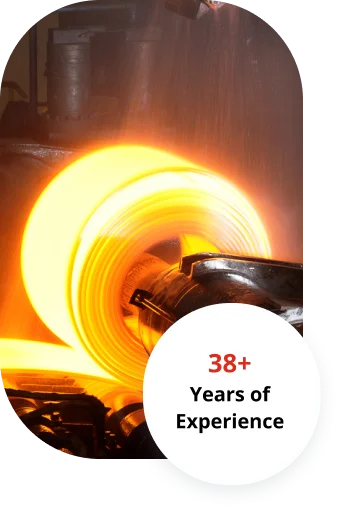
Lighthouse ERP software of Rolling Mill Industry is designed to handle complete needs in the most efficient, effective & accurate way. Lighthouse ERP has continuously evolved since 1987 and Lighthouse is committed to provide an industry- specific, ERP modules, comprehensive and robust solution for the Steel Industry. Lighthouse's technical expertise and mapping of key requirements is the key behind its success.

It readily gives Balance RM to procure, Balance FG to plan, to roll, to inspect and to dispatch on a click for a specific order to roll set and product.
ERP for Rolling Mill Industry
lighthouseindia
lighthouseindia

Challenges of Rolling Mill Industry

Challenges Production Complexity

Production Complexity

Rolling mill involves several processes like melting, reheating, rolling. To lose traceability in these stages can result in compliance failures and quality control which can be avoided with end-to-end production traceability.

Challenges Complex Material Flow

Complex Material Flow

Materials flow through several internal and external paths, making it hard to track and manage their movement accurately.

Challenges Limited Procurement & Inventory

Limited Procurement & Inventory

Poor inventory visibility results in stock outs, excess production, and loss of materials due to lack of inventory management which encourages

Challenges Outdated Costing Method

Outdated Costing Method

Manual input- supported monitoring of material usage and overheads take time and is error-prone.

Challenges Unclear Order Management

Unclear Order Management

Mismatches in customer orders, tolerances, and delivery order deadlines disrupts the order fulfillment cycle.

Benefits of ERP for Rolling Mill Industry

Benefit End-to End Heat

End-to End Heat/Billet-Wise Traceability

With the ability to attach quality certificates at the time of delivery, Lighthouse ERP for rolling mill guarantees traceability of heat and billets from manufacture to shipment

Benefit Seamless Material Tracking

Seamless Material Tracking

To give full material flow visibility, the system keeps track of all inventory movements, store requisitions, material issues, returns, repairs, and transfers.

Benefit Smarter Inventory

Smarter Inventory & Procurement Decisions

Steel manufacturing ERP points out procurement at the indent stage, permits stock checks at the PO or indent level, and employs ABC analysis and Min-Max levels to improve material use.

Benefit Accurate Costing

Accurate Costing and Process Loss Tracking

Better control and efficiency are provided by production costing, which is calculated using important parameters including fuel, power, labor, and yield losses.

Benefit Better Order Execution

Better Order Execution and Customer Service

With the ability to compare bundle-wise and net weights for accurate delivery handling, the rolling mill ERP system provides flexibility in managing item amounts at the contract and dispatch levels.

Features of Lighthouse ERP for Rolling Mill Industry

icon

Effective Production Planning & Control

ERP enables structured planning using BOM, MRP, and monthly schedules. With control over process parameters and shift-wise batch production.

icon

Heat & Lot-Wise Traceability

Tracks materials and production processes heat-wise from raw material receipt to finished goods, including quality test certificates and lot register maintenance.

icon

Real-Time & Yield Variance Management

Compares standard vs. Actual yield to identify process inefficiencies and control wastage, supporting variance analysis at each production stage.

icon

Integrated Rolls Management

Maintains shift-wise and mill-wise production records, including godown-level batch tracking, to monitor roll usage and availability in real time.

icon

Accurate Quality Control & MIS

Generates real-time MIS reports on production costing, plant performance, and quality inspections to support compliance and internal audits.

icon

End-to-End Material Flow Tracking

Tracks inward and outward movement of material at each location Security Gate, Weighbridge, Yard, Stores with visibility over every plant movement type.

icon

Controlled Inventory Across Plant Locations

Manages stock at Raw Material Yard, Crusher, Feeder, Bagging, and Discharge areas with material stacking and charging precision.

Frequently Asked Questions About ERP For Rolling Mill Industry

Rolling mill ERP is manufacturing software built around the complexities of high-volume rolled steel production — TMT bars, structural sections, flats, rounds, hexagons. It covers billet intake, production planning, roll pass management, yield control, quality inspection, and order dispatch. The goal is visibility and control across a fast-moving, diverse product mix.

Lighthouse ERP manages hundreds of product combinations across sections, sizes, grades, and standards — with item-level BOMs, size-wise production tracking, and flexible pricing per product specification. If you're rolling 80 different sizes today and adding more next quarter, the system grows with you.

Every billet is tracked from its source heat — and corresponding quality certificate — through reheating, rolling, and bundling to the final customer dispatch. If a customer raises a quality concern on a TMT bar, you can pull up the exact heat it came from, who rolled it, and what the test results were. That's the kind of accountability customers in infrastructure and construction increasingly expect.

The ERP captures actual rolled output vs standard expected output for each billet or lot, and identifies losses at each stage — reheating, rolling, cropping. Variance reports can be broken down by shift, furnace, and product type, so you're not just seeing the total loss number but understanding where it's happening.

Yes. The system maintains shift-wise and mill-wise production records linked to specific rolls, tracking tonnage rolled per roll, wear rates, and replacement schedules. This helps optimise your roll inventory investment and avoid both premature replacements and surprise failures.

Procurement indents are raised based on MRP, with stock checks before any PO is approved. ABC analysis and min-max levels help optimise billet and raw material inventory, and all store movements are tracked in real time. The result is leaner inventory with fewer stockouts.

Yes. Chemical and mechanical test results for each heat and lot are recorded against the required standards. The ERP auto-generates test certificates and links quality data to sales invoices — so compliance documentation is always ready when your customers or inspection agencies ask for it.

Real-time visibility of available stock by size, grade, and bundle weight means your sales team can confirm orders with confidence. Production output is matched to open orders as it comes off the mill, and delivery order generation with weigh-slip-linked invoicing makes dispatch faster and more accurate.